The World of Work — As an Actual World
You're about to enter the world of work. Everyone has advice. Almost none of it is useful.
Career quizzes sort you into a personality type, then hand you a list of jobs. As if "ENFJ" tells you what your Tuesday should look like.
Guidance counselors mean well but their information is years behind. The world of work they describe isn't the one you're entering.
And then there's the AI anxiety. Headlines telling you everything is about to change, but nobody showing you how — or what it actually means for someone starting out now.
You deserve better than a personality test.
What if you could see the world of work as an actual world?
Not a list of job titles. Not a career category. A living landscape — organized by where in the world the work actually happens. Because you already understand physical space. You know the difference between an ocean and a city at night. You don't need a career vocabulary to start exploring.
Seven zones. Each one a different place to work — and a different way to live.
Cockpits, control towers, launch pads, weather stations. Pilots, aerospace engineers, air traffic controllers, atmospheric scientists, satellite operators.
The densest zone — and the most varied. Hospitals, courtrooms, studios, restaurants, tech campuses, trading floors, classrooms, government buildings. Most careers live here, but the sub-environments are wildly different.
Open land, weather, seasons, and physical work. Agriculture, renewable energy, conservation, veterinary science, forestry, rural medicine, outdoor education.
Research vessels, offshore platforms, coastal labs, ports. Marine biology, shipping logistics, naval architecture, oceanographic research, fisheries management.
Below the surface — literally. Mining engineering, geological research, tunnel construction, archaeology, cave science, subsurface infrastructure.
No fixed location. Your laptop is the office. Software development, cybersecurity, data science, digital creative work, online education — work that lives everywhere and nowhere.
Careers defined by movement itself. Journalism, diplomacy, international development, touring musicians, humanitarian aid, field research. The movement IS the work — not just the commute.
Not a career quiz. A career landscape.
It starts with what you do, not who you are.
"I like art" tells us almost nothing. But "I love the creating — making something from nothing with my hands"? That tells us everything.
The same ing appears across wildly different fields. But PurPassion goes further — it's your specific combination of ings that reveals the surprises.
Pattern-finding + caring + harmonizing might converge in music therapy, epidemiological research, and healthcare UX design. Fields you'd never connect on your own. Your combination is the map.
The world is changing. Everyone knows it. Almost nobody is showing you how — and almost nobody is showing you what it opens up.
We show you what AI can do in every field — and what it's actually doing right now. That gap matters. Understanding it is how you make real decisions.
But here's what no one else is telling you: the same changes that reshape existing roles create entirely new possibilities. When AI collapses a skill barrier, combinations that weren't viable before suddenly are.
A filmmaker who couldn't afford a production crew can now produce broadcast-quality work solo.
A doctor passionate about data can now do population-level pattern analysis that used to require a statistics PhD.
A domain expert with no coding background can build real software.
We don't just show you what's changing. We show you what's opening.
Every landscape needs a guide.
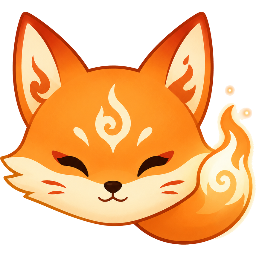
A kitsune — a fox spirit from Japanese folklore. Ancient, warm, and impossibly knowing. It has traveled every zone of this landscape. It knows what's around the next hill.
Think Yoda... but foxier, because it knows about Epidemiology. 🦊
PurPassion is launching soon. Be among the first to explore the landscape.
You're in. We'll be in touch.